
Personal Finance Basics
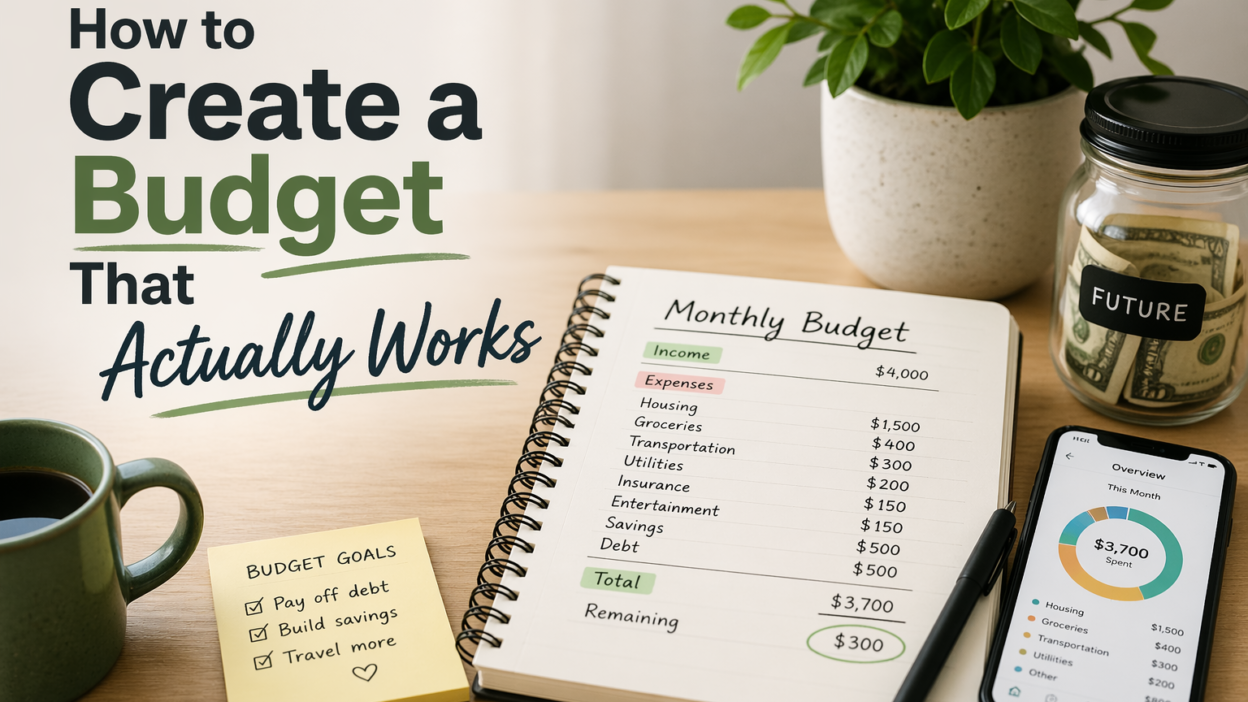
How to Create a Budget That Actually Works (And Stick to It)
You’ve probably tried budgeting before. Maybe you downloaded an app, tracked spending for a week, then abandoned the whole thing. You’re not alone — most budgets fail not because people are bad with money, but because the budget itself was unrealistic.
Here’s how to build one that actually fits your life — and that you’ll actually follow.
Step 1: Figure Out Your Real Monthly Income
Start with your take-home pay — not your gross salary. This is the money that actually hits your bank account after taxes, health insurance, and retirement contributions are taken out.
If your income varies (freelance, tips, commissions), calculate a conservative average based on your last 3 months.
Step 2: List Every Single Expense
Most people underestimate what they spend. Go through your last 2–3 bank and credit card statements and categorize everything:
- Fixed: rent, mortgage, car payment, insurance, loan payments
- Variable: groceries, gas, dining out, entertainment, clothing
- Periodic: annual subscriptions, car maintenance, holidays, birthdays
Don’t forget periodic expenses — they’re the ones that blow most budgets. Divide annual costs by 12 and add them as a monthly line item.
Step 3: Assign Every Dollar a Job
A budget works when every dollar has a purpose before it’s spent. Use this simple formula:
Income − Fixed Expenses − Savings = Money Available to Spend
The key word there is “savings first.” Pay yourself before you pay anyone else. Even $100/month set aside automatically makes a huge difference over time.
Step 4: Choose a Budgeting Method That Suits You
There’s no one-size-fits-all approach. Here are three popular methods:
- 50/30/20 Rule: 50% needs, 30% wants, 20% savings. Great for beginners.
- Zero-Based Budgeting: Every dollar is assigned until you hit zero. Very detailed and effective.
- Envelope Method: Allocate cash into physical (or digital) envelopes for each category. Spending stops when the envelope is empty.
Step 5: Review and Adjust Every Month
A budget isn’t a set-it-and-forget-it document. Life changes — and your budget should too. Set aside 15 minutes at the end of each month to:
- Review what you actually spent vs. what you planned
- Identify categories where you overspent
- Adjust next month’s numbers accordingly
No budget survives contact with reality unchanged. The goal is progress, not perfection.
The Bottom Line
A good budget isn’t about restriction — it’s about intention. When you tell your money where to go, you stop wondering where it went. Start simple, stay consistent, and adjust as you learn.
Want more tips like this? Explore more Personal Finance Basics articles at YourFinanceWorld.com